
Skip to Content

BIR E-Invoicing 2026: Is Your Business Ready?

A Practical Guide for Philippine SMEs Preparing for the December 31, 2026 Deadline
September 2, 2026 by
XciTech

BIR E-Invoicing 2026: Is Your Business Ready?

A Practical Guide for Philippine SMEs Preparing for the December 31, 2026 Deadline


December 31, 2026 is getting closer. That's less than four months.

For many Philippine SMEs, the Bureau of Internal Revenue's transition toward electronic invoicing may sound like another compliance requirement that can be dealt with later. But waiting until the deadline could create unnecessary problems.

Electronic invoicing may require businesses to change not only how invoices are issued, but also how sales, customer information, inventory and accounting records are managed. And for most SMEs, this means digitally transforming their businesses.

The good news? This does not have to become a complicated IT project. With proper preparation, SMEs can use the BIR requirement as an opportunity to simplify their operations, reduce manual work and build a more organized digital business. This translates to pursuing more growth opportunities.


What Is BIR E-Invoicing?
Electronic invoicing, or e-invoicing, is part of the BIR's continuing move toward digital tax administration. Under BIR Revenue Regulations No. 11-2025, as amended by RR No. 26-2025, certain taxpayers are required to comply with electronic invoicing requirements by December 31, 2026.

The regulations form part of the implementation of the Ease of Paying Taxes Act (Republic Act No. 11976) and the government's broader digitalization of tax administration.

Simply creating an invoice in Word or Excel and emailing a PDF should not be confused with becoming fully prepared for the emerging electronic invoicing environment. Businesses need to consider the information and business processes behind every invoice.


Who Needs to Prepare?
Among the taxpayers covered by the December 31, 2026 electronic invoicing requirement are certain:

  • Small, medium and large taxpayers engaged in e-commerce or internet transactions;
  • Taxpayers under the BIR Large Taxpayers Service;
  • Taxpayers classified as Large Taxpayers under the Ease of Paying Taxes Act; and
  • Businesses using computerized accounting systems or invoicing software.
Other taxpayer categories may become subject to additional requirements as the BIR completes the implementation of its electronic invoicing framework.

SMEs should therefore not automatically assume that the requirement applies only to large corporations. Businesses selling through websites, e-commerce platforms and other online channels should pay particular attention.


Why Should SMEs Start Preparing Now?
The biggest challenge may not be about generating an electronic invoice, and how to do it. It is what happens before the invoice is created.

Consider a growing business where orders come through different channels, salespeople maintain separate spreadsheets, inventory is recorded elsewhere and accounting receives transaction information at the end of the week. Introducing another invoicing system into that environment may simply create another disconnected process.

Instead, business owners should ask: Can we use this requirement to make our entire business easier to manage?

That is where digitalization becomes valuable.


How Can Odoo Help With E-Invoicing Readiness?

Odoo is an integrated business management platform that allows SMEs to connect many activities that normally happen before and after invoicing.

A typical process can become:

Customer > Quotation > Sales Order > Inventory/Delivery > Invoice > Accounting > Payment
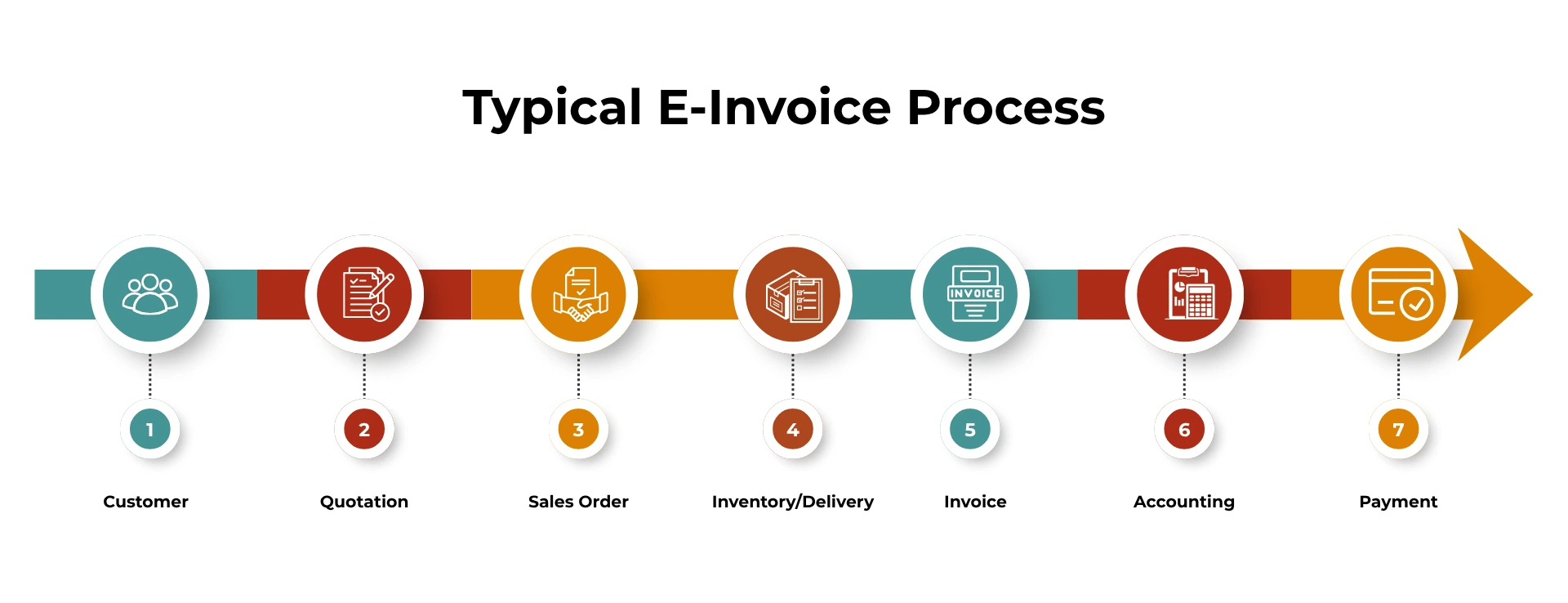
Typical E-Invoicing Process

Instead of repeatedly entering the same information into spreadsheets and separate applications, information can flow through one integrated business system.

For Philippine companies, Odoo also provides localization capabilities supporting Philippine accounting requirements. However, installing software does not automatically make a business BIR-compliant.

Processes must be properly configured. Business records need to be cleaned up. Employees need training. The company's accountant or tax adviser should also verify the requirements applicable to the business. That is why Xcitech recommends starting with readiness assessment rather than software installation.


A Simple BIR E-Invoicing Digitalization Road Map
  1. Assess. Review how your company currently handles sales, invoicing, inventory and accounting. Identify manual processes, duplicate encoding, disconnected applications and potential compliance gaps.
  2. Clean Up. Organize customer, supplier, product, inventory and accounting information before moving it into a new system. Digitalizing inaccurate information will not solve the underlying problem.
  3. Integrate. Bring essential business functions together using Odoo. For many SMEs, this can begin with CRM, Sales, Purchasing, Inventory, Invoicing and Accounting rather than attempting to digitalize everything at once.
  4. Prepare. Configure invoicing and accounting processes based on the company's operations and applicable BIR requirements.
  5. Test. Process actual business scenarios before going live. Test a complete transaction: Order > Delivery > Invoice > Payment > Accounting. Also test returns, cancellations and adjustments.
  6. Train. Employees do not need to become technology experts. They simply need to understand the new process and how their work affects the next person in the transaction.
  7. Transition. Move into actual operations early enough to identify and correct problems before December 31, 2026.
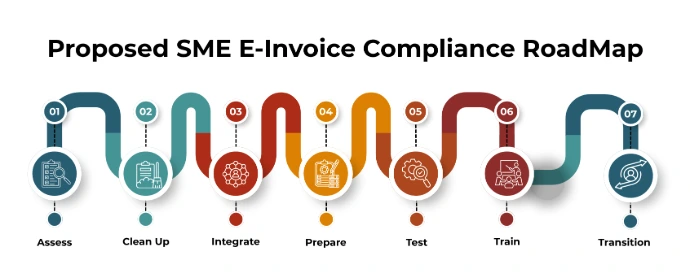
Proposed SME E-Invoice Road Map

Don't Start With Software. Start With Readiness.
The BIR e-invoicing transition is not simply about replacing paper invoices with electronic ones.

For SMEs, it is an opportunity to address a much bigger question: Is your business ready to operate digitally?

Xcitech Business Consulting can help SMEs assess their current processes, identify gaps and develop a practical roadmap toward BIR e-invoicing readiness and digitalization using Odoo.

Our approach can cover:

Readiness Assessment > Digitalization Roadmap > Odoo Implementation > Data Preparation > Process Improvement > User Training > Testing > Transition Support
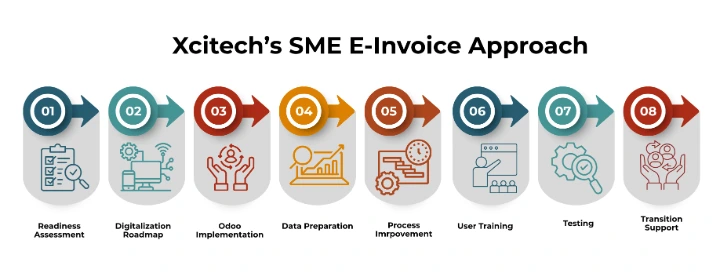
Xcitech SME E=Invoice Approach

The objective is not simply to help your company meet another government requirement. It is to help build a business that is easier to manage, better organized and ready for growth.

Get a FREE BIR E-Invoicing Readiness Assessment
Not sure whether your current accounting or invoicing system is ready for December 31, 2026?

Start with an assessment—not a software purchase.

Xcitech is offering a FREE BIR E-Invoicing Readiness Assessment for qualified SMEs.

We will help you review your current invoicing and business processes, identify potential gaps and determine practical next steps toward digitalization and compliance.

Know where you stand before the deadline arrives. Request Your FREE BIR E-Invoicing Readiness Assessment Today


Important: BIR electronic invoicing guidelines continue to evolve. Businesses should confirm their specific tax and compliance obligations with the BIR and their professional tax or accounting advisers.

References:

  1. hhttps://bir-cdn.bir.gov.ph/BIR/pdf/RR%2011-2025.pdf
  2. https://bir-cdn.bir.gov.ph/local/pdf/RMC%20No.%203-2024%20Annex%20A.pdf
  3. https://www.odoo.com/documentation/19.0/applications/finance/fiscal_localizations/philippines.html
Share this post
Tags
Archive
Xcitech Launches Odoo Optimization Services to Help SMEs Maximize Their ERP Investment
Beyond Implementation: Helping Businesses Unlock the Full Value of Odoo